{15/03/23}
An immersive, multimedia exhibition celebrating the relationship between humans and plants; ethnobotany.
Curated & produced by Lewis Dobbs.
↓↓↓
Forming my final-year dissertation at Warwick University, Mycelia was a research-based interactive exhibition, designed to investigate the human response to art, the influence of ethnobotanical [humans and plants’ symbiosis] themes in art reception, and the importance of environmental discourse within multimedia. These research areas combined in a practical experiment form new ground in the academic field of human psychology within an art setting. The exhibition was supported by Sustainability at Warwick.
The exhibition featured live sound installations, with improvised synth pieces performed by me, immersive natural field recordings played in a surround-sound system, and a free-to-play set-up with the PlayTronica TouchMe in which users can generate sounds through touching plants and soil.
Along with the sound features, physical paintings, digital art, magazines, short experimental film, poetry, and collage populated Mycelia. All the art was of ethnobotanical themes, and was sourced from local and international artists. For a list of the artists involved, see below:
Feranmi Majekodunmi [she/her]
Olivia Wilson [she/her]
Macarena Francisca [she/her]
Charlie Vásquez [they/them]
@000d1g1m0n [they/them]
Eliza Davis [she/her]
Beck Alfaro [they/them/it/its]
Linda Zaranyika [she/her]
Mackenzie Pickersgill [she/her]
Lucy Prior [she/her]
Tabitha Fawcus [she/her]
Eve Grennan [she/her]
Prishika Nagar [she/her]
Asmaa Elsouda [she/her]
Olga Tomaszewska [she/her]
Hannah Corsini [she/her]
↓↓↓
A playlist inspired by the sounds of Mycelia.
Gallery
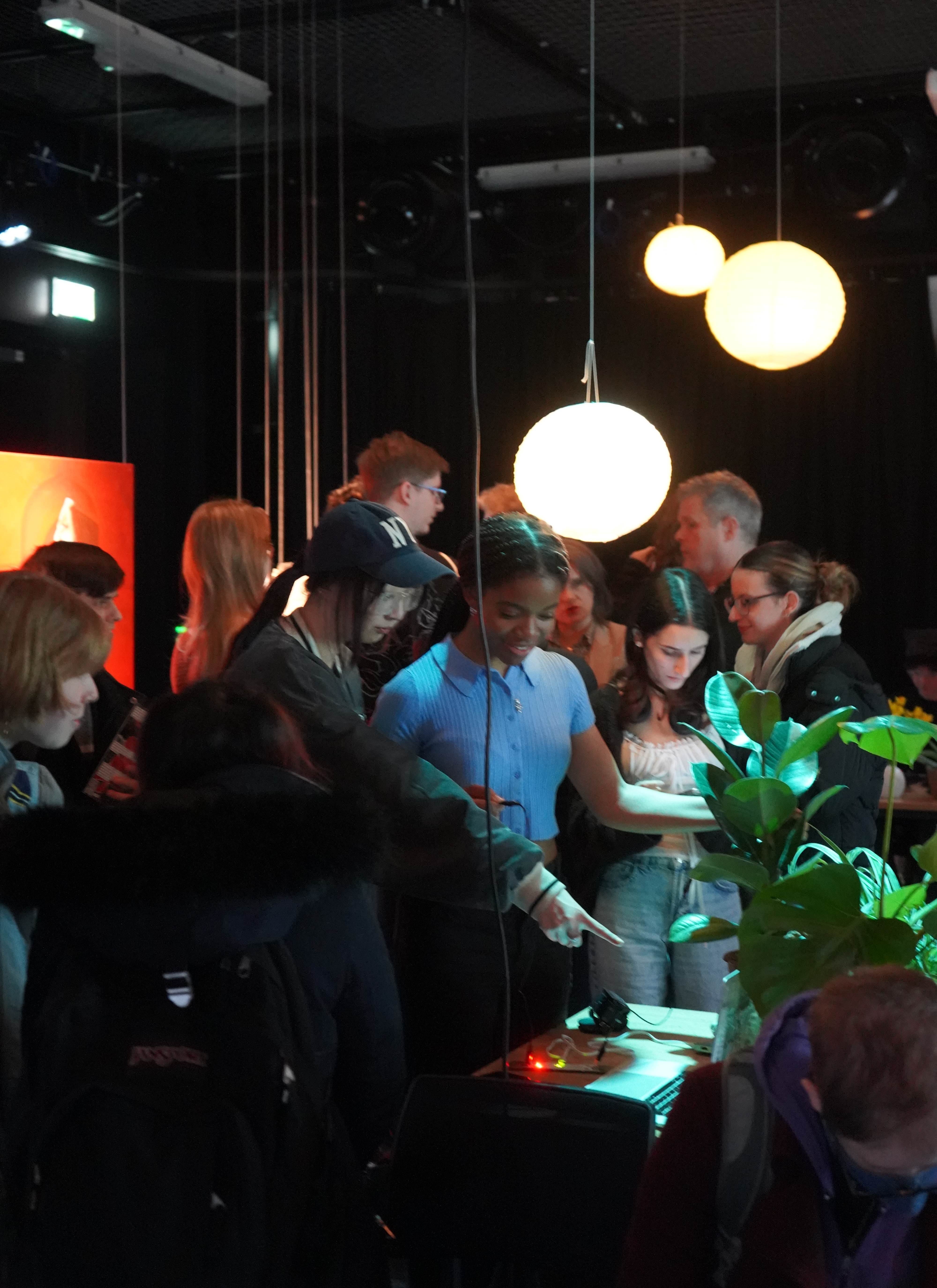
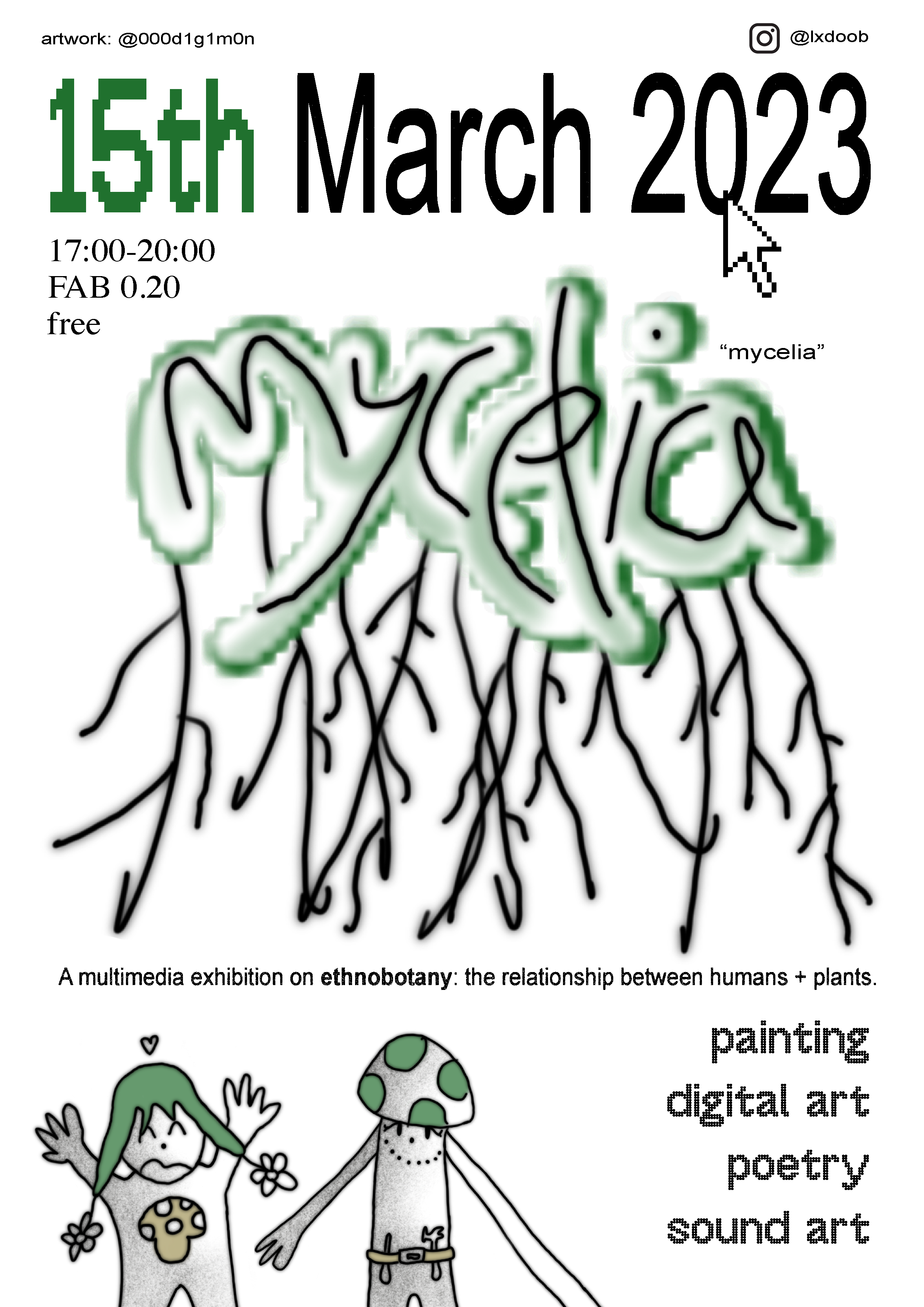
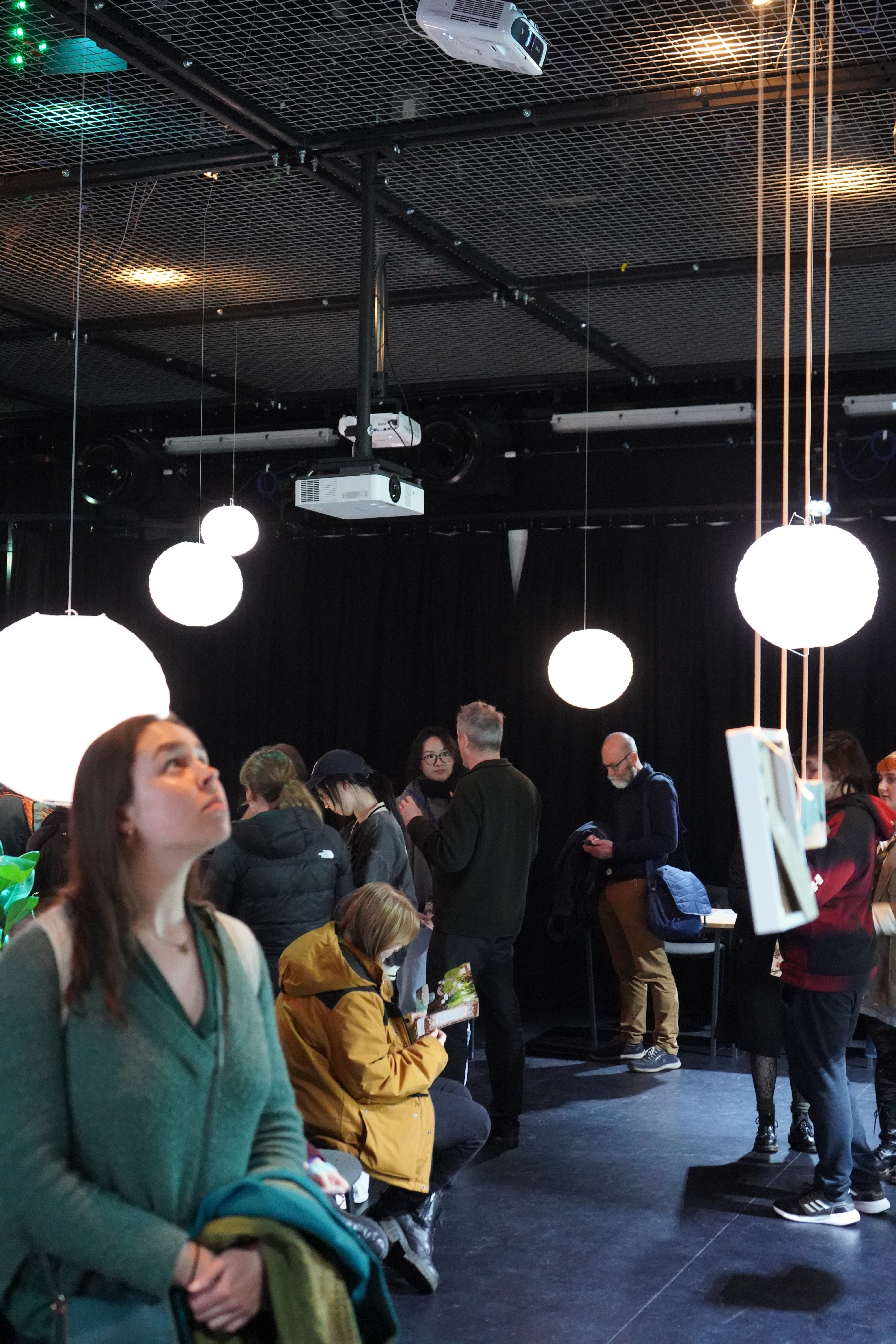
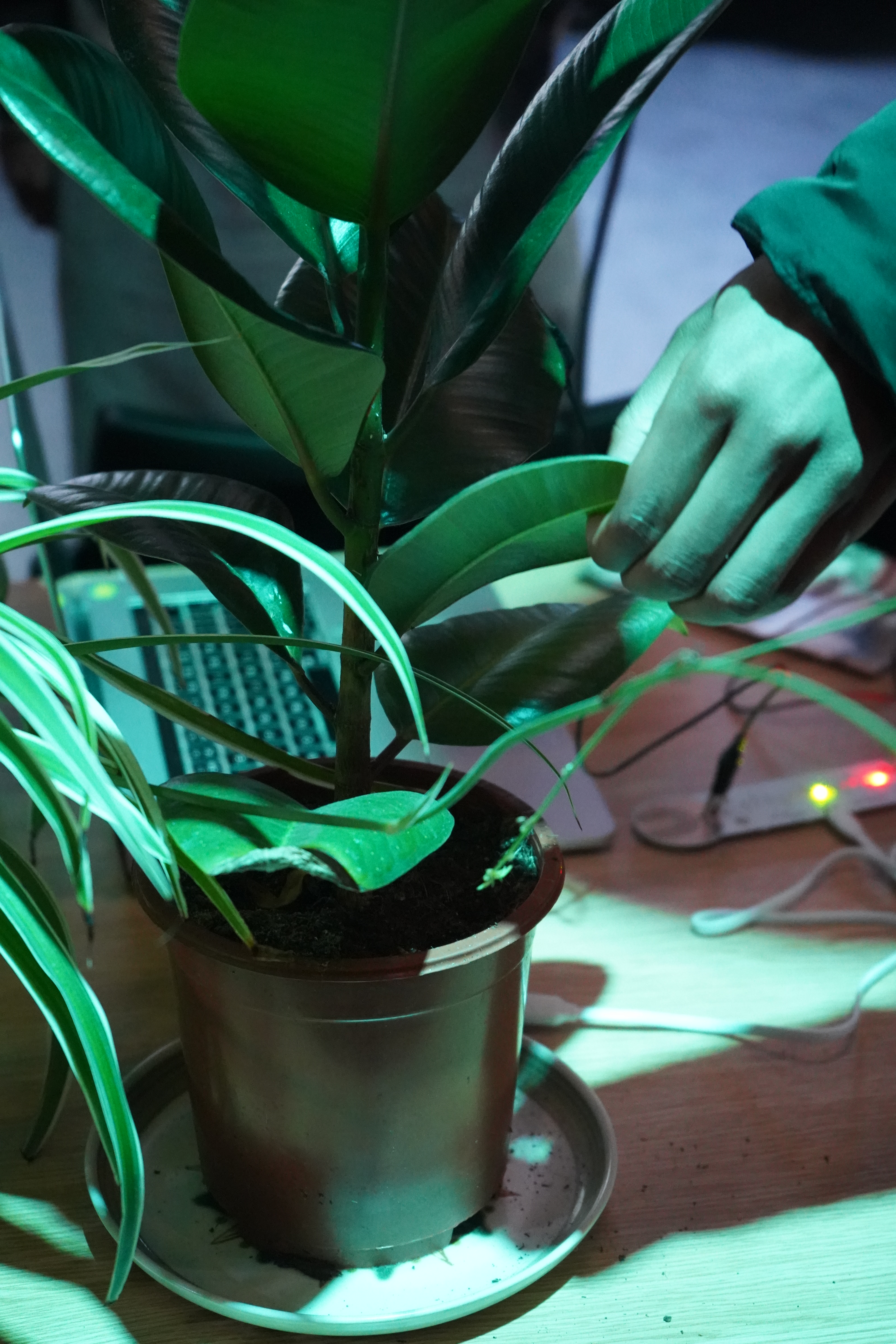
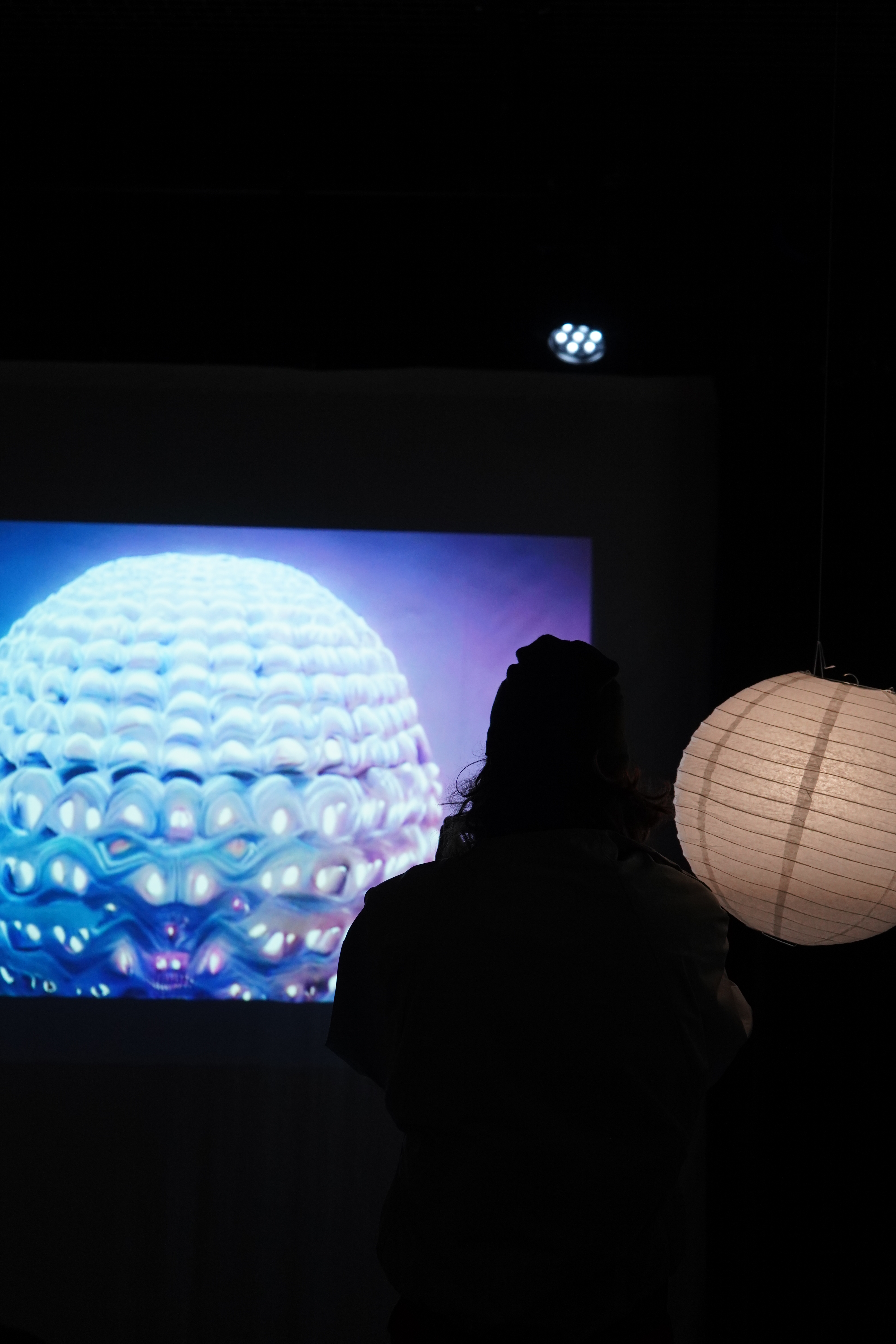

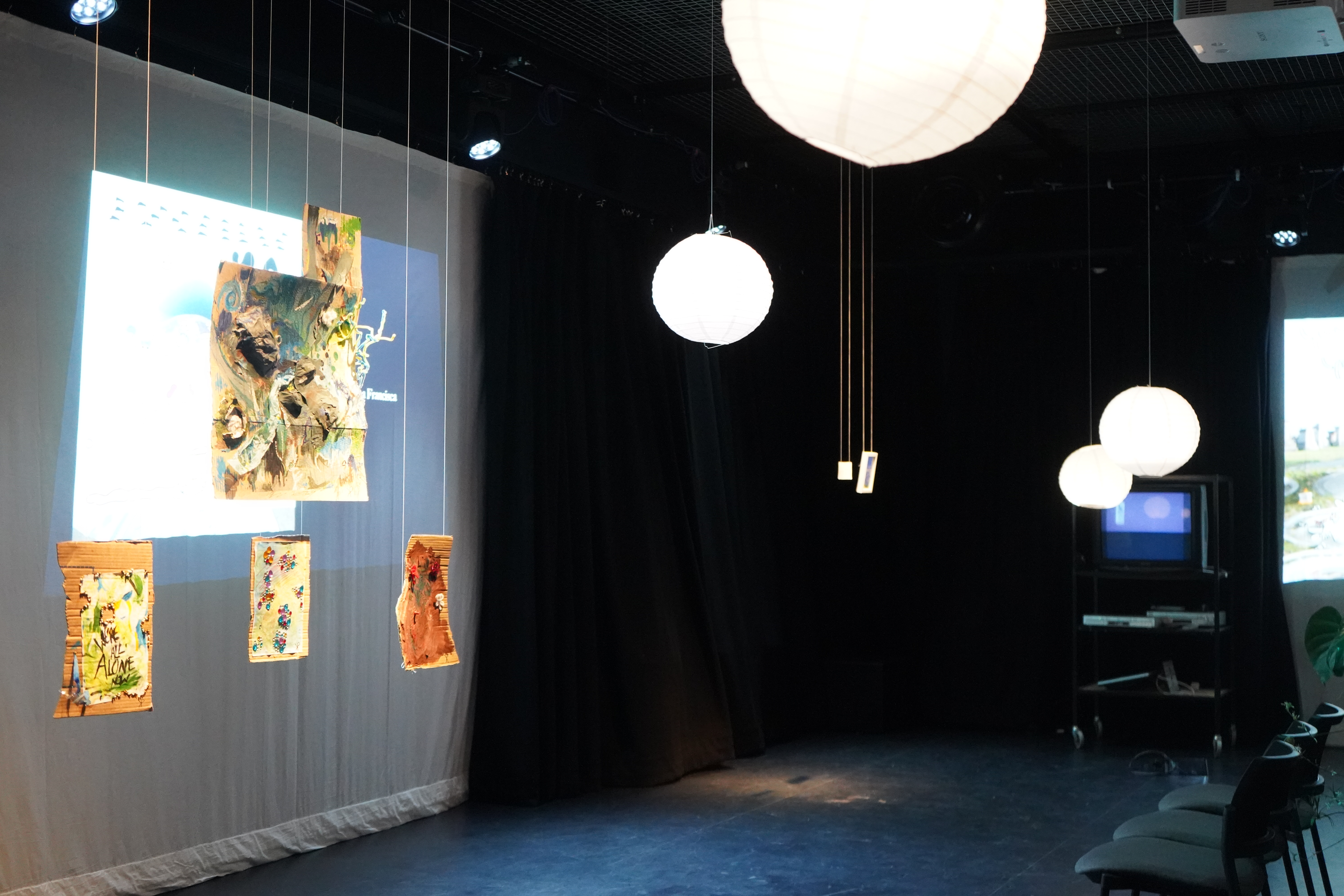
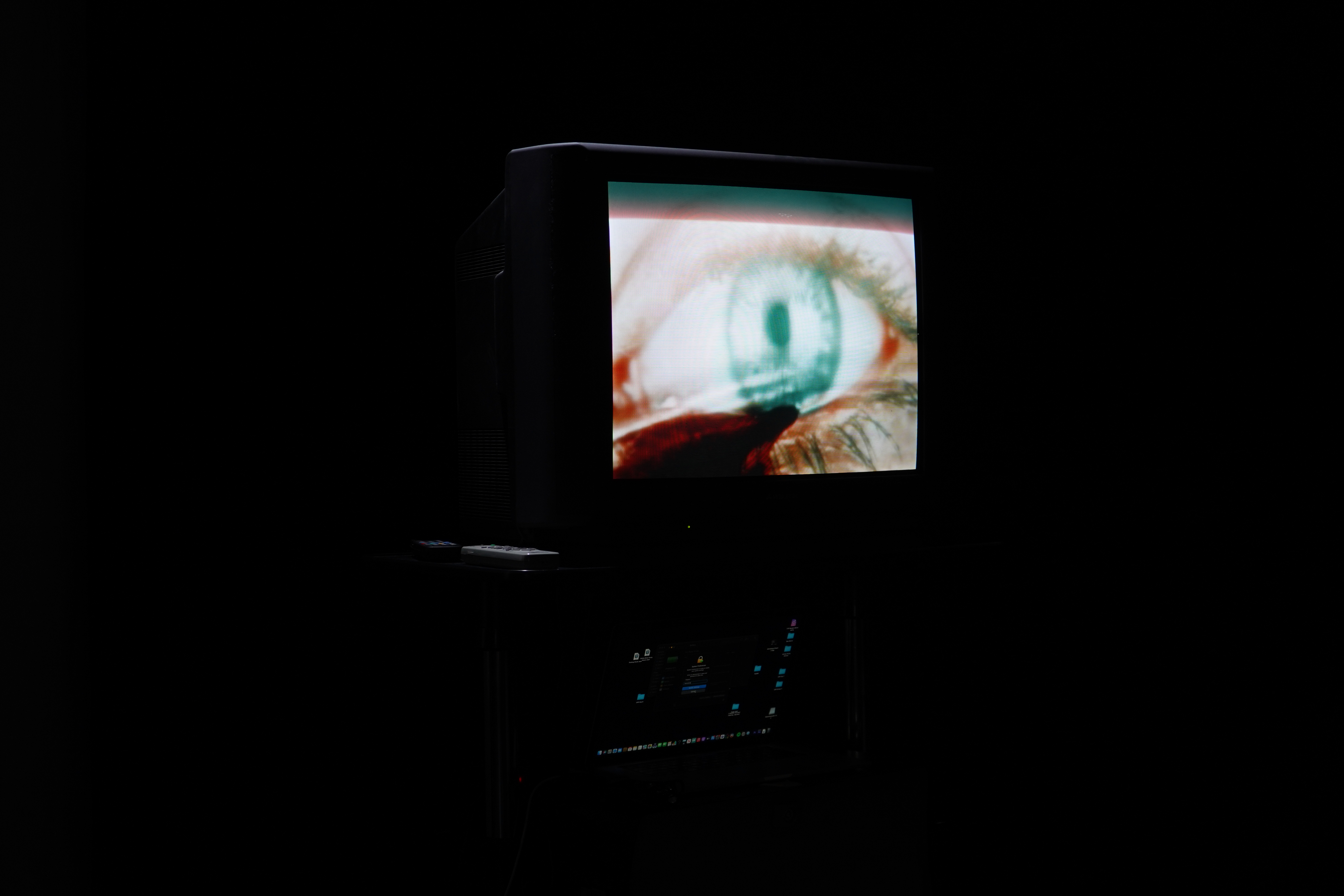
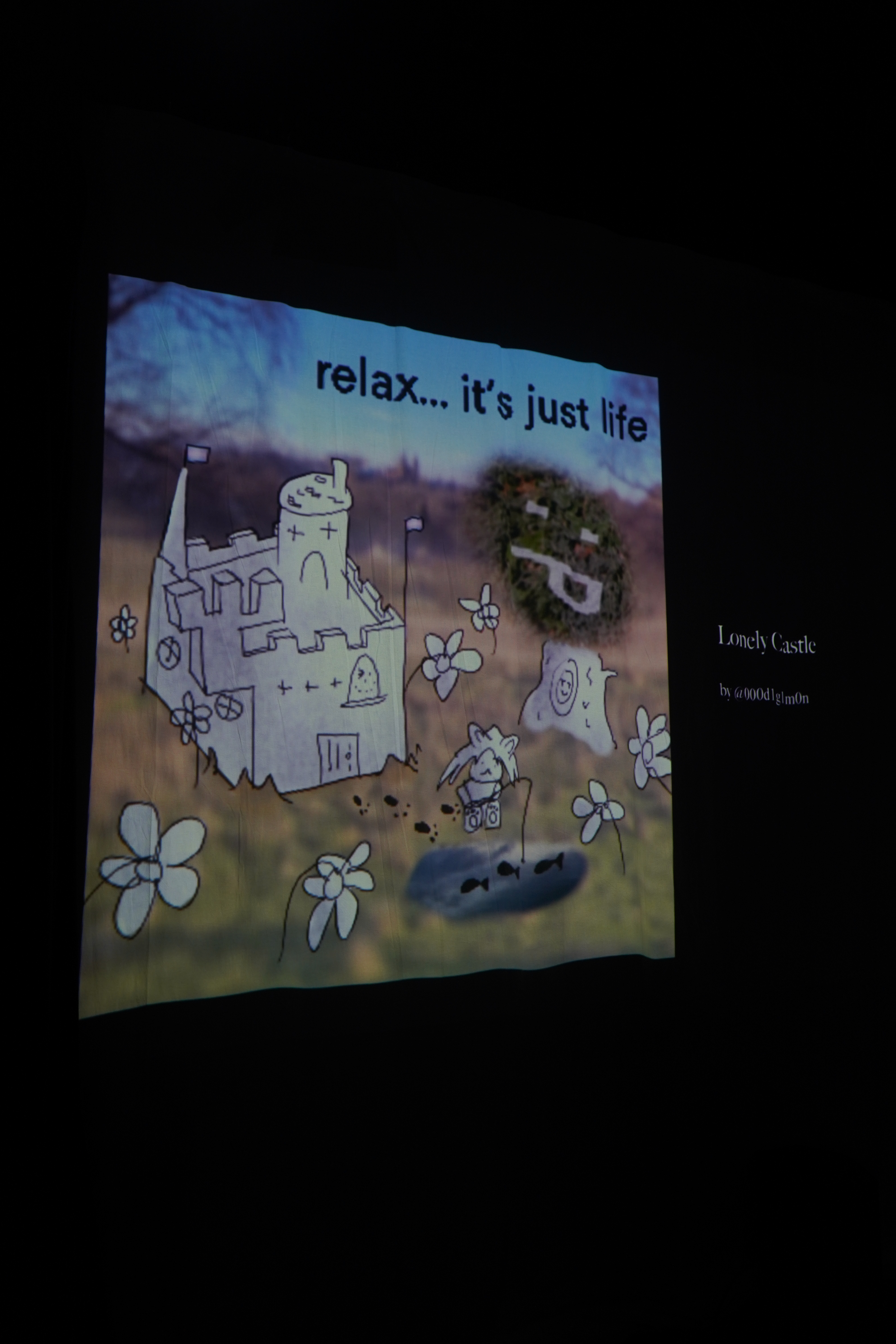
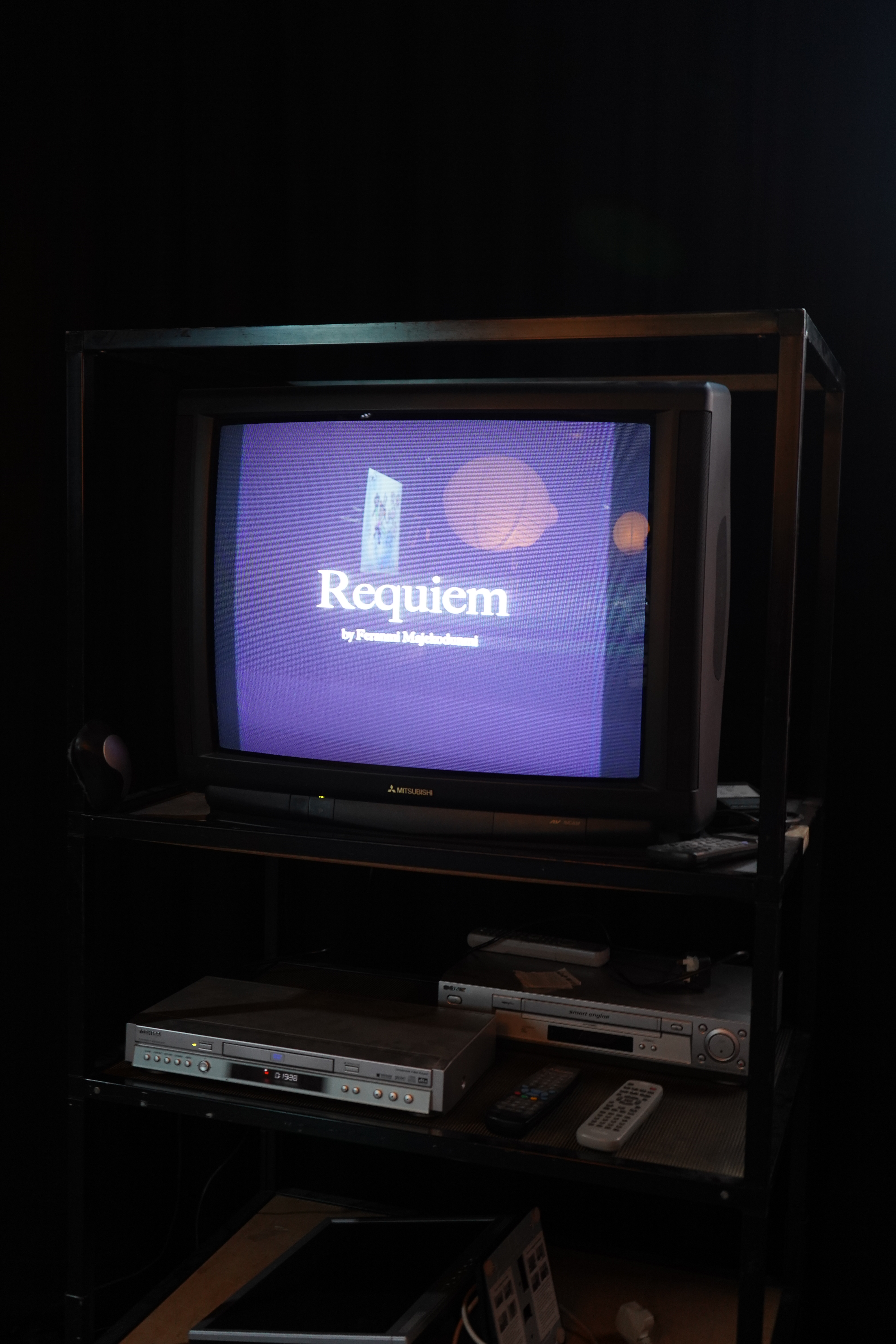
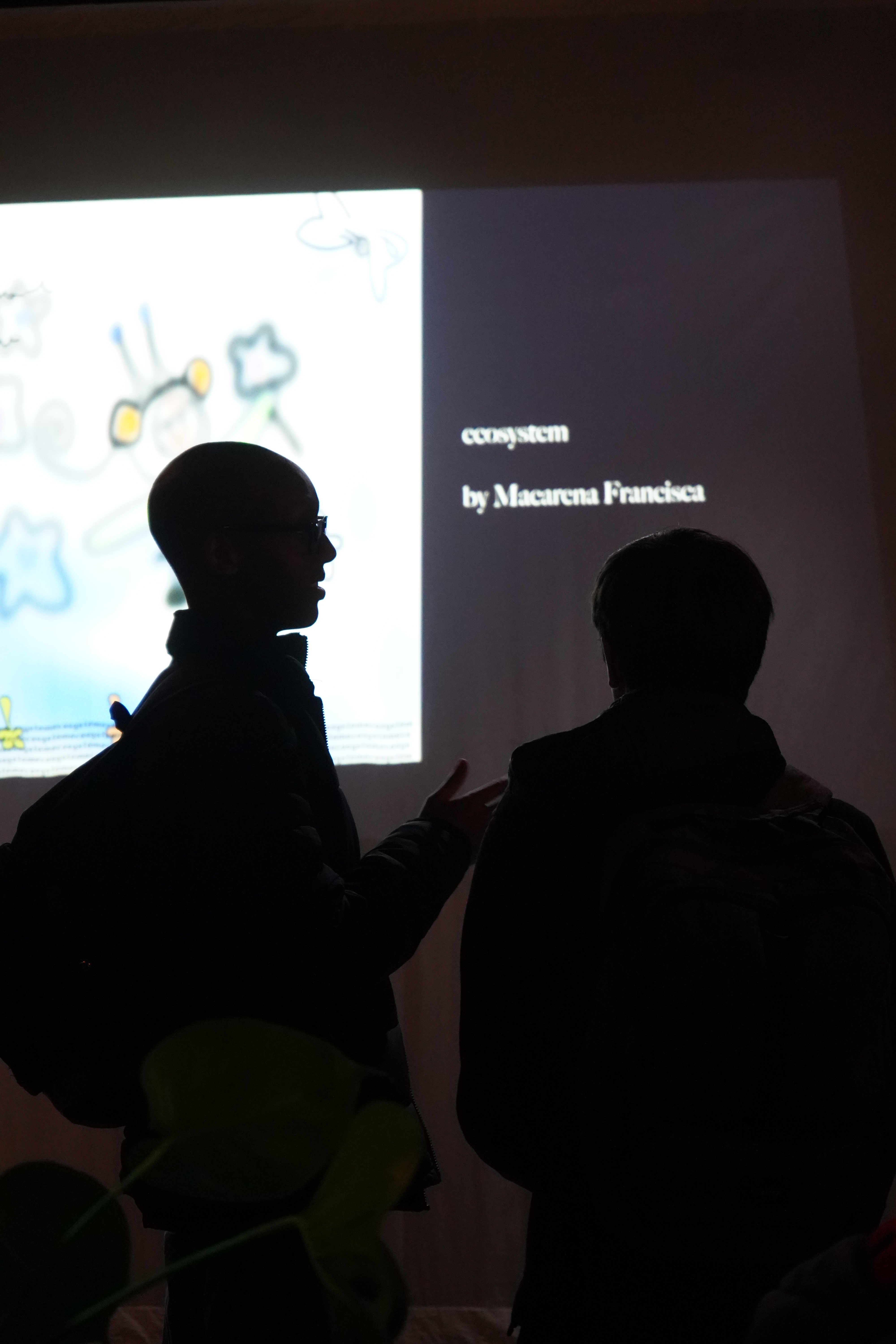
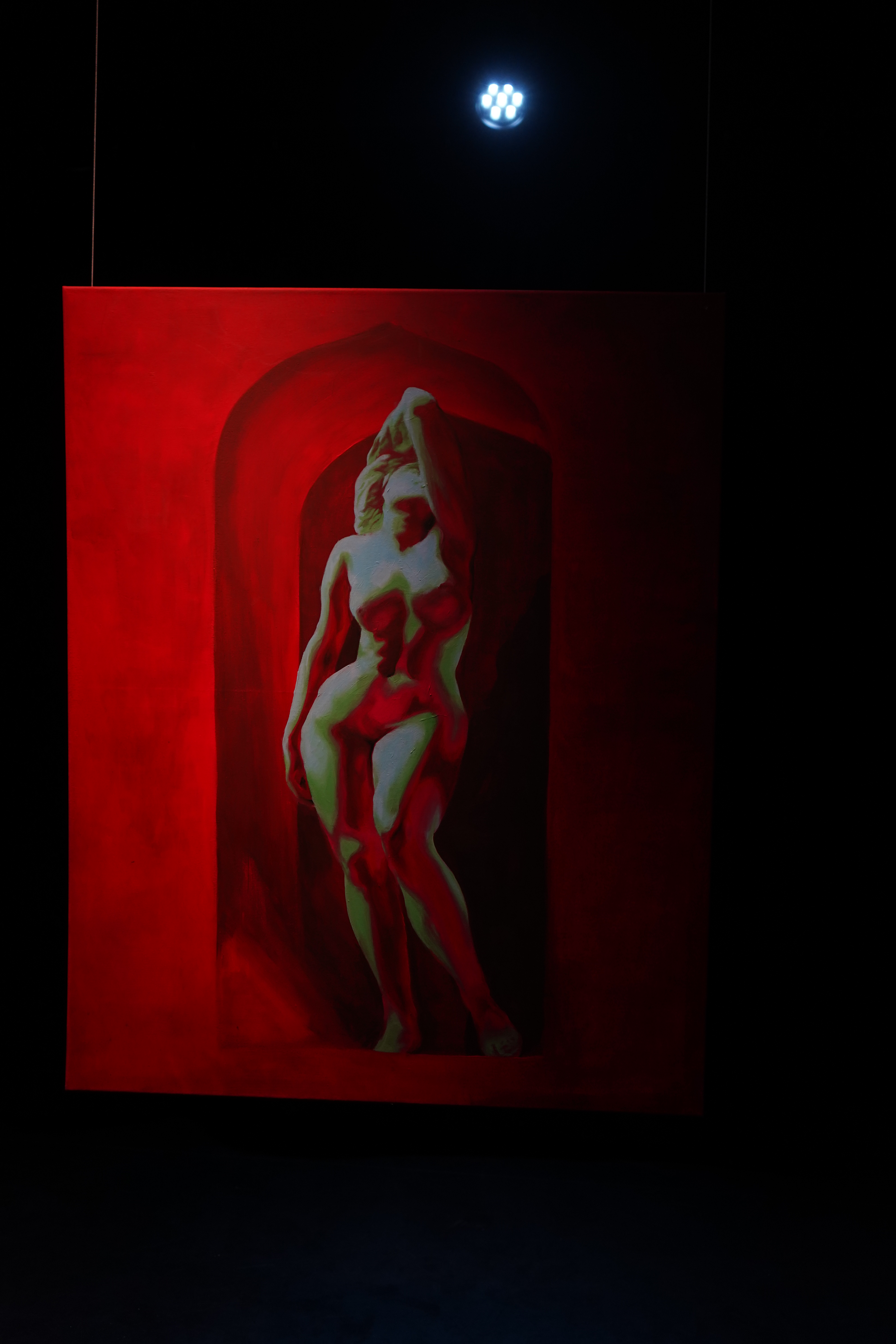
Photo credits: Gobi Cheung
For more photos, click here.
^ Audio from Mycelia.
Video from Mycelia, here. [37;18]
↓↓↓
Design
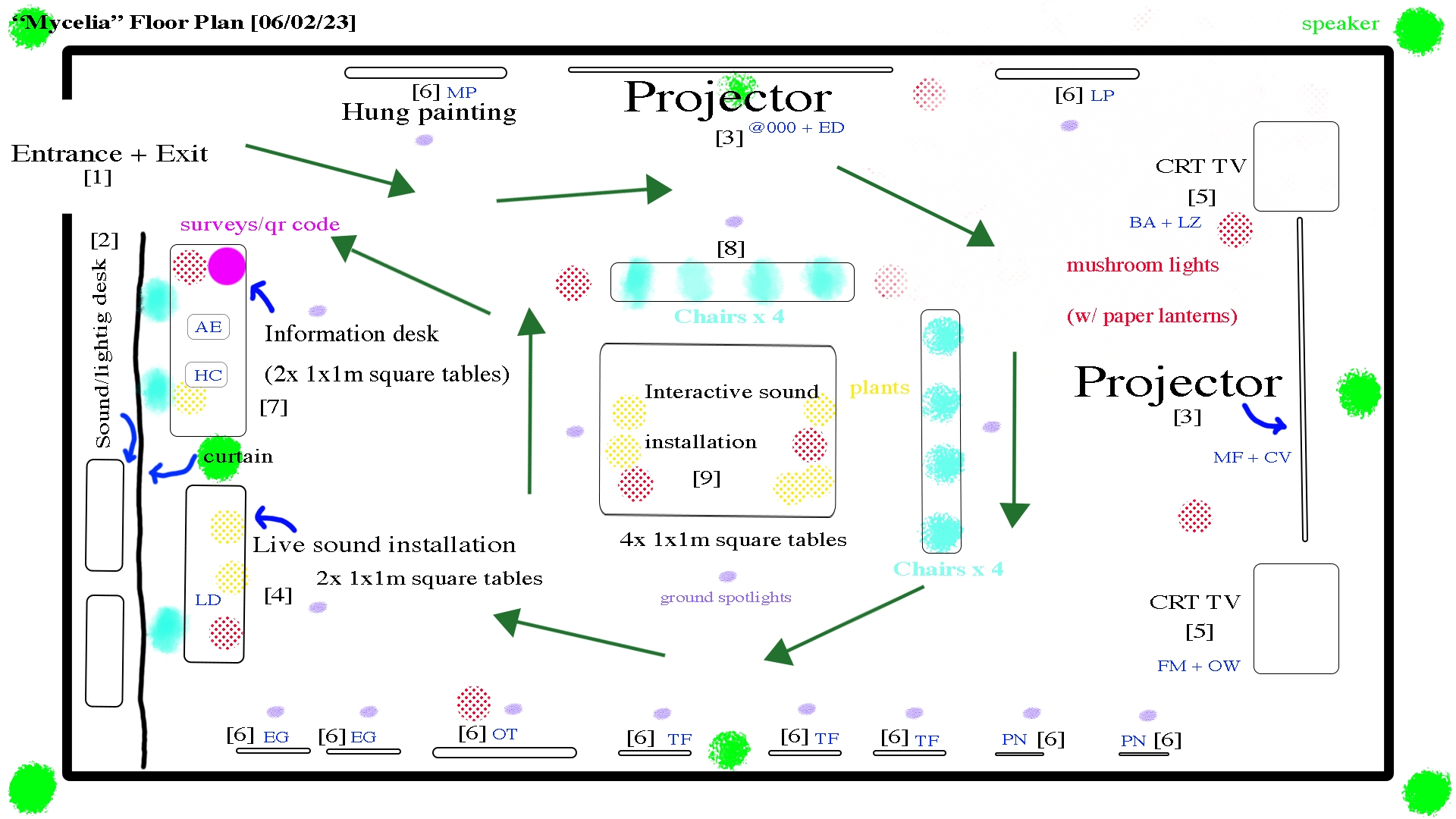
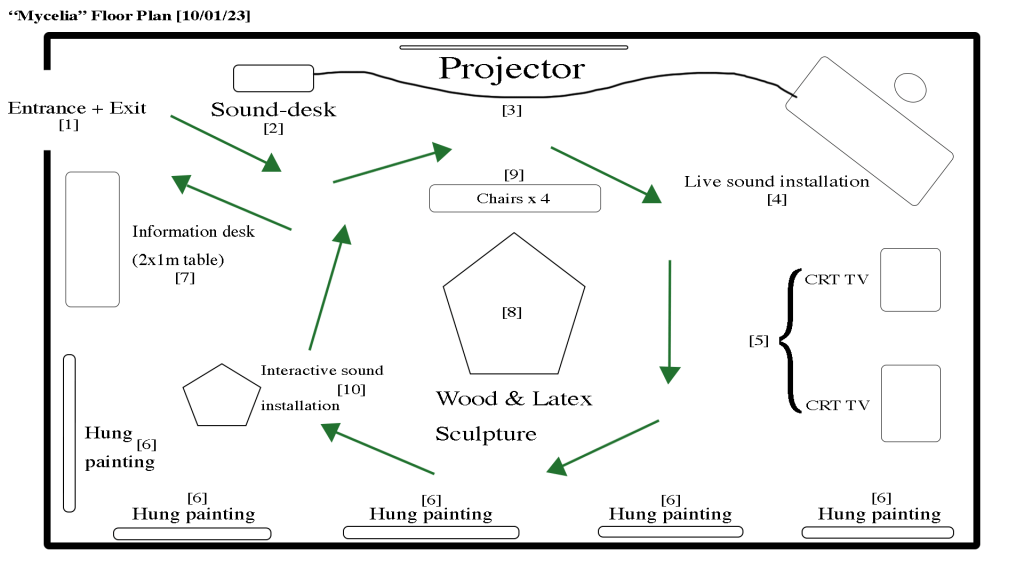
Mycelia began its preparation stages in September 2022. Having visited the space, I could picture what I wanted. This is the 3rd and final floor plan I created, listing where each piece would be placed, and where lights, chairs, desks, and acoustics would be arranged.
While there is never a strict direction for visitors to travel, I found that, for the most part, everyone tended to follow the path I had intended.
Set-up of the room took approximately 8 hours, and take-down 2 hours. I’d like to wholeheartedly thank the Warwick Faculty of Arts Technician team who gave their invaluable support and patience to Mycelia.
v Previous drafts of Mycelia‘s floor plan.

↓↓↓
Performance
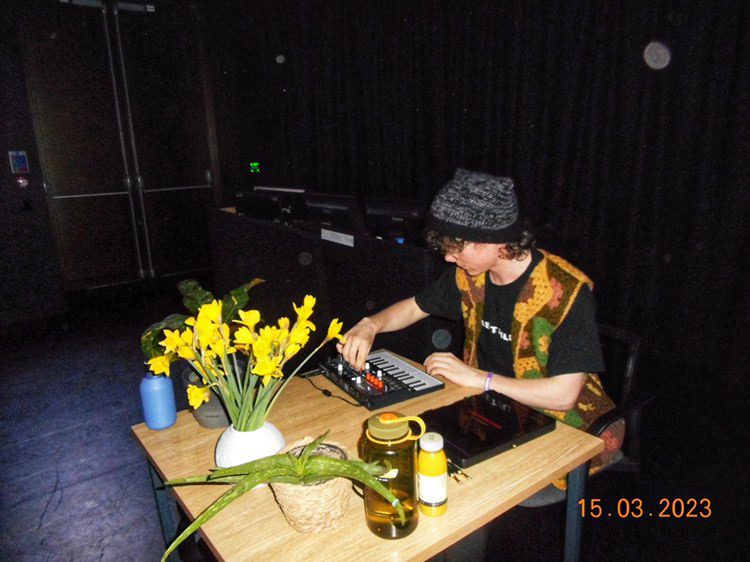
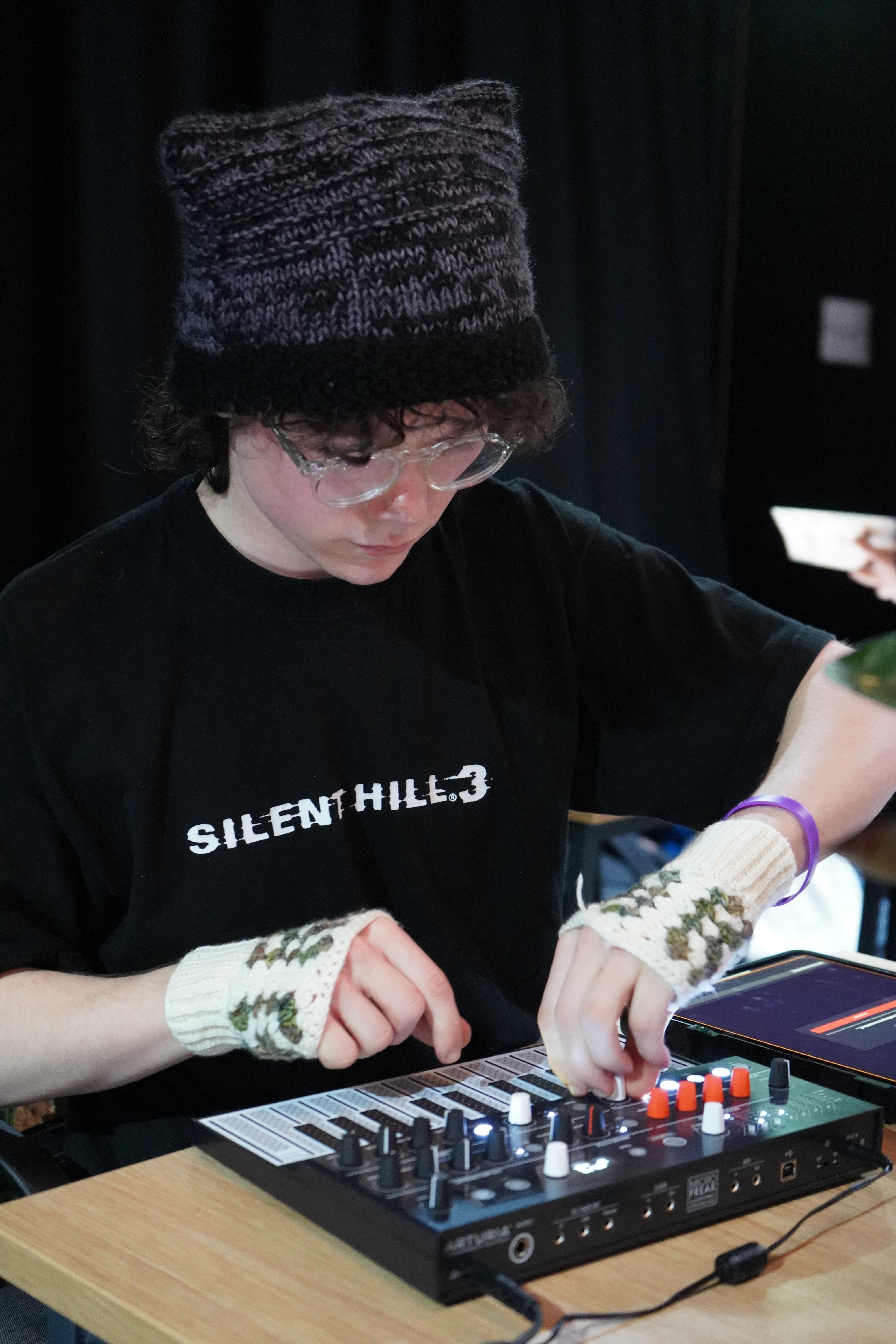
During my live, 3-hour improvisation, I used a collection of natural field recordings from rainforests, rivers, floodplains, and other environmental areas. [Authors: fieldrecording.net, Go Outside, GowlerMusic, Hearing Beings, Listening Earth, Nature Sounds Japan, Phil Mill, soundfishing.com, Windshear Audio, Woodcraft Productions, and woollypigs]
As well as this, I used an Arturia Microfreak to produce ambient soundscapes and synth patterns to reflect humanity’s technological cohesion with nature. The Arturia Microfreak is an algorithmic, paraphonic synthesiser that mainpulates various wavetables and parameters to produce sound. I used this, along with QLab’s stock audio effect plugins to play music throughout the event.
↓↓↓
Interviews
In preparation for Mycelia, I interviewed experts in sustainability to ask them about their views on ethnobotanical art and environmentalism within the creative world.
Stefania Luca [she/her] – President of Warwick University’s Plant Society
Esha Shah [she/her] – Sustainability Ambassador for Sociology Department at Warwick University
Katherine Mayfield [she/her] – Sustainability Champion at Warwick University
Evelin Sanderson-Nichols [she/her] – Assistant Sustainability Champion at Warwick University
Charity Bellan [she/her] – Cut the Flow Assistant
Priya Chawla [she/her] – Cut the Flow Assistant
^ Interview with Stefania Luca (30/11/22) ^
↓↓↓
↓↓↓
Final Dissertation: “Mycelia”: An investigation into the human reception of ethnobotanical art and immersive multimedia in art exhibitions
 lewis xavier dobbs